

We’ve all encountered someone who just can’t seem to stop whether it’s a friend recounting every detail of their day or a presenter who veers far off topic.
This is what it means to talk on and on. Finding the right synonym elevates your vocabulary, sharpens your writing, and helps you communicate more effectively across contexts.
In this comprehensive guide, you’ll explore a rich lexical field of alternatives to “talk on and on.”
We’ll define the phrase, examine why synonyms matter for communication, introduce an original Synonym Selection Framework, cluster words by context, provide deep dives into key terms, comparisons, tables, and practical advice.
Whether you’re a writer, student, professional, or language enthusiast, this resource delivers genuine information gain beyond basic lists.
What Does “Talk on and On” Really Mean?
The phrase talk on and on describes prolonged speech that continues without clear purpose or conclusion. It often carries a mildly negative or neutral connotation of persistence, repetition, or lack of conciseness. It appears in everyday English to describe monologues, digressions, or enthusiastic (but exhaustive) conversations.
Related concepts include verbosity, loquacity, and circumlocution. Antonyms might include be concise, get to the point, clam up, or speak succinctly.
Why Learning Synonyms for “Talk on and On” Matters
Strong vocabulary improves clarity, persuasion, emotional nuance, and audience engagement. In professional settings, the right word avoids sounding repetitive or critical. In creative writing, it paints vivid character portraits. For SEO, semantic richness, and AI search optimization, varied language signals topical authority and satisfies user intent more deeply.
Original Framework: The Lexical Flow Model for Endless Speech
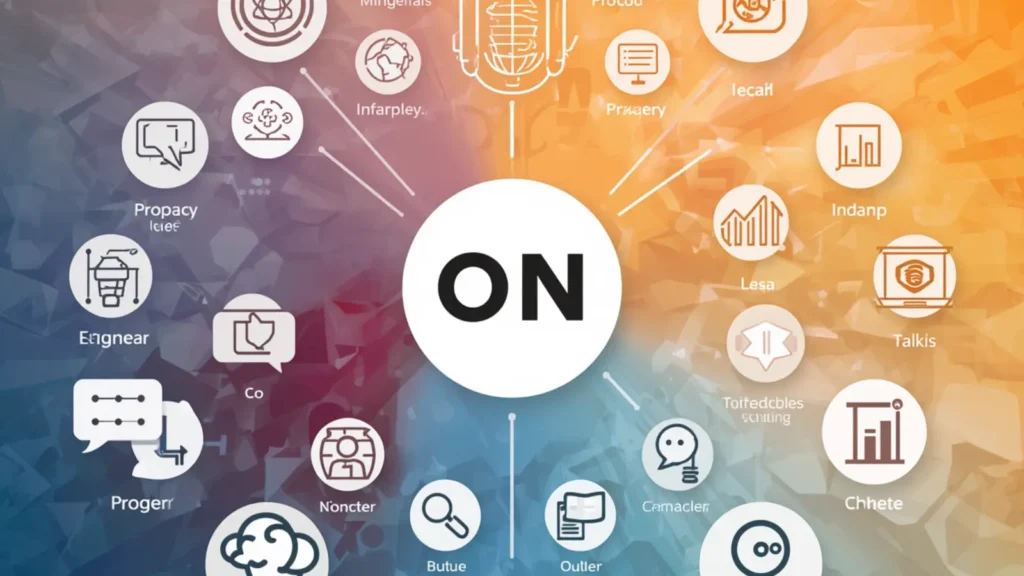
To move beyond lists, use this Lexical Flow Model:
- Intensity Level — Light (playful chatter) vs. Heavy (tedious monologue).
- Directionality — Meandering (ramble) vs. Repetitive (drone) vs. Incoherent (babble).
- Register — Informal (natter) vs. Neutral (go on) vs. Formal (discourse at length).
- Emotional Tone — Affectionate, annoyed, neutral, or critical.
- Context Matrix — Match to audience, medium, and goal.
This model helps select the most natural synonym every time.
Semantic Clusters: Synonyms Organized by Context

Everyday Conversation & Informal Talk
- Chatter: Light, rapid, sociable talk. Tone: Friendly/neutral. Best for friends catching up. Example: “She chattered away about her vacation for hours.”
- Natter (esp. British English): Casual, gossipy chatting. Example: “They nattered on over coffee.”
- Prattle: Foolish or childish continuous talk. Slightly dismissive.
Professional & Business Communication
- Drone on: Monotonous, boring continuation. Strong negative tone. Collocations: drone on about budgets, procedures.
- Go on (and on): Neutral-to-negative persistence. Very common. Example: “The manager went on and on about targets.”
- Speak at length: More formal, often neutral or positive in presentations.
Creative Writing & Literary English
- Ramble: Wander through topics without clear structure. Connotation: Disorganized but possibly charming. Comparison: Ramble vs. Talk on and on — ramble emphasizes lack of focus.
- Blather: Foolish or nonsensical prolonged talk. Informal, critical.
- Maunder: Wander in speech or thought (more literary).
Persuasive, Marketing & Public Speaking
- Filibuster: Speak at great length to delay (political origin).
- Hold forth: Speak at length, often authoritatively or pompously.
Emotional Expression & Negative Connotations
- Run off at the mouth: Informal, implies indiscretion or excess.
- Yak / Yabber / Yatter: Noisy, trivial talking (often annoying).
Deep Dives into Key Synonyms
Ramble Definition: Talk or write at length in a confused, inconsequential way. Formality: Medium. Tone: Often neutral to mildly critical. Usage: Great for storytelling or describing thought processes. Example: “He tends to ramble when nervous, jumping from one idea to the next.” Grammar: Often “ramble on” or “ramble about.” Vs. Prattle: Ramble suggests wandering logic; prattle suggests silliness.
Prattle Definition: Talk at length about trivial matters in a foolish way. Tone: Condescending or affectionate (context-dependent). Best contexts: Describing children or light-hearted annoyance. Example: “The toddler prattled on about his toys.”
Blather / Blether Definition: Talk foolishly at length. Tone: Strongly negative, implying emptiness. Collocations: blather on about nothing.
Drone On Definition: Speak in a dull, monotonous tone for a long time. Tone: Highly negative boredom-inducing. Example: “The lecturer droned on, and half the class fell asleep.”
Comparison Tables
Intensity & Tone Comparison
| Synonym | Intensity | Tone | Best Context | Connotation |
|---|---|---|---|---|
| Chatter | Low | Friendly | Casual chats | Positive/Neutral |
| Prattle | Medium | Foolish | Light criticism | Mildly negative |
| Ramble | Medium | Meandering | Storytelling | Neutral |
| Blather | High | Nonsensical | Strong annoyance | Negative |
| Drone On | High | Monotonous | Boring meetings | Strongly negative |
| Filibuster | Very High | Deliberate | Politics/Debate | Strategic |
Formality Spectrum
- Informal: Yak, natter, prattle, blather
- Neutral: Go on and on, talk endlessly
- Formal: Discourse at length, expatiate, perorate
“Talk on and On” vs. Related Words
- Vs. Chatter: “Talk on and on” implies duration and potential tedium; chatter is quicker and more social.
- Vs. Rant: Rant involves anger; talking on and on does not require emotion.
- Vs. Lecture: Lecture has educational intent; the others often lack it.
Vocabulary Development Tips
- Collocations: talk endlessly about, go on forever, keep droning, prattle away.
- Idioms: Talk the hind legs off a donkey, talk a blue streak, beat a dead horse.
- Common Mistakes: Overusing “talk on and on” in writing—vary with synonyms for flow. Avoid mixing registers (e.g., “prattle” in a formal report).
Actionable Writing & Communication Advice
- Audience Fit: Use “chatter” with friends; “speak at length” in reports.
- Tone Control: Soften criticism with “tend to go on” instead of “blather.”
- Editing Tip: Read aloud—does it flow or drone?
- For Non-Native Speakers: Practice with voice recordings to master rhythm and intonation.
Pronunciation Notes (General American/British):
- Ramble: /ˈræm.bəl/
- Prattle: /ˈpræt̬.əl/
- Blather: /ˈblæð.ɚ/
FAQ Section
What is the most formal synonym for talk on and on? “Expatiate,” “discourse at length,” or “perorate.”
Is “ramble” positive or negative? Context-dependent—charming in personal stories, disorganized in business.
How do I stop myself from talking on and on? Prepare key points, practice timed delivery, and watch for listener cues.
Are there positive ways to describe lengthy speech? Yes: “elaborate thoughtfully,” “share in depth,” “hold the floor engagingly.”
Conclusion: Mastering the Art of Verbal Flow
Understanding synonyms for talk on and on transforms how you describe, analyze, and engage in communication.
By applying the Lexical Flow Model and semantic clusters in this guide, you gain precision, authority, and creativity in your language use.

Mark Twain ka asal naam Samuel Clemens tha. Yeh apni humorous aur realistic writing ke liye mashhoor hain. Unki famous books mein The Adventures of Tom Sawyer aur Adventures of Huckleberry Finn shamil hain. Unhone American society ko bohat achi tarah depict kiya.